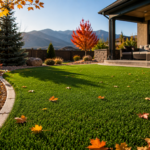
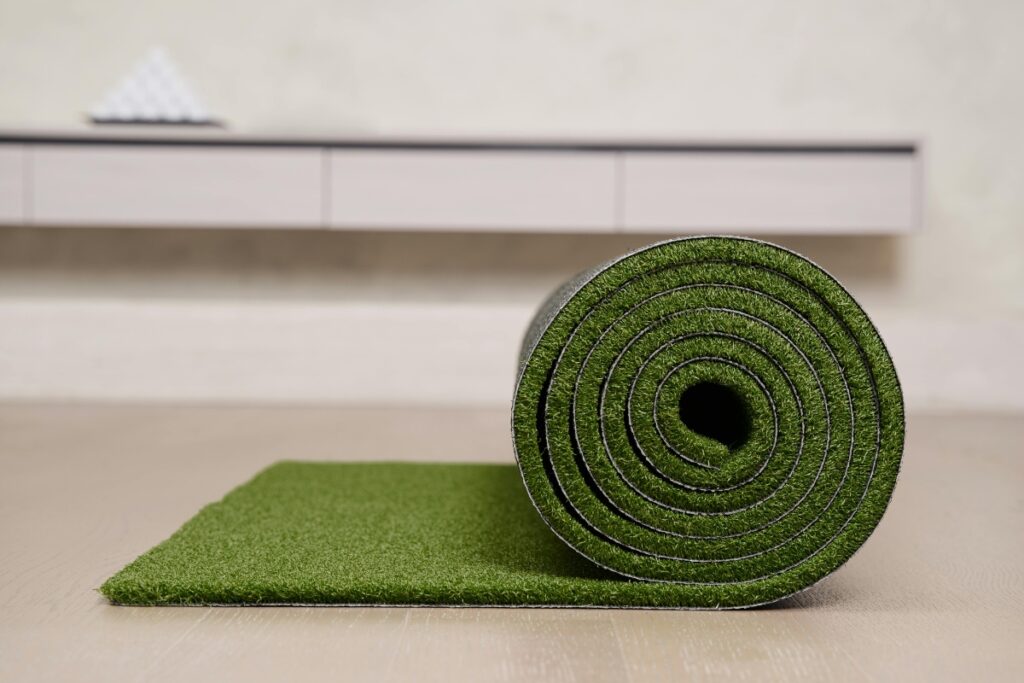
A lawn that used to need mowing every week can turn into a patio extension, a play area, a xeriscape bed border, or a mix of all three once the grass is gone, and the right layout depends on how your household lives in the yard day to day, not just what photographs well.
Colorado Springs adds a few local wrinkles most general design guides skip. Altitude and sun exposure change how materials age, water restrictions make plant pairing matter more than in wetter climates, and a lot of yards here run smaller than the sprawling suburban lots featured in most landscaping content. This is what holds up on the ground in this market.
Pairing Turf With Drought-Tolerant Plants
Turf alone solves the water problem for the lawn itself, but the beds around it still need planning if you want the whole yard to hold up during watering restrictions. Colorado State University Extension maintains a running list of drought-tolerant perennials suited to Colorado’s high plains and intermountain conditions, and pairing turf borders with plants from that list keeps water use down across the whole property instead of only on the lawn.
Penstemon, blanket flower, and serviceberry all show up repeatedly in Colorado-specific plant guides for exactly this reason: they’re bred or selected for low moisture needs and they handle this region’s elevation without much fuss. Framing a turf area with a bed of these instead of traditional annuals cuts the irrigation load for the entire property.
According to the EPA’s WaterSense program, residential outdoor water use across the United States adds up to nearly 8 billion gallons a day, most of it going to landscape irrigation. In a market with active water restrictions, a turf-plus-xeriscape combination cuts into that number on both fronts at once, the lawn and the beds around it.
Multi-Purpose Zones: Play Areas, Fire Pits, and Outdoor Living Space
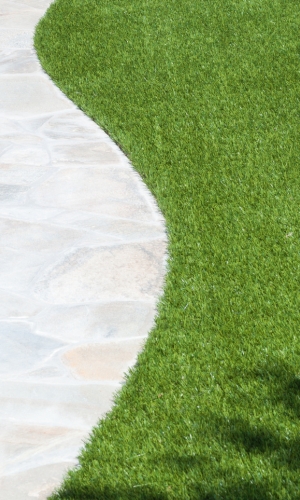
Turf handles zoning better than natural grass because you can run it right up to a hardscape edge without worrying about grass dying along the border. A common layout splits the yard into a turf play or lounge area bordered by pavers, with a fire pit or seating zone set into the hardscape rather than the turf itself.
If a fire pit is part of the plan, keep it off the turf directly and use a non-combustible surface underneath, gravel, pavers, or a fire-rated mat. Our fire pit safety guide covers the specific clearance and placement details.
For households with kids or dogs, a common approach is a turf zone sized for active use bordered by a narrow gravel or mulch strip, which gives a visual break between play space and planting beds without adding a hard edge that’s easy to trip on. Our residential turf page covers the turf styles best suited to different zone types if you’re still deciding between options.
What Turf Design Ideas Work Best in Small Colorado Springs Yards?
Smaller yards benefit more from simplicity than variety. A single turf zone that runs the full width of the space, bordered by one consistent hardscape material, reads as larger than the same square footage broken into multiple small sections. Mixing three or four different materials in a small yard, turf, gravel, pavers, and mulch all in the same sightline, tends to make the space feel busier and smaller than it is.
Vertical elements do more work in a tight footprint than horizontal ones. A single trellis, a raised planter along a fence line, or a small tree in a corner bed adds visual interest without eating into usable turf area the way a second seating zone or garden bed would.
Design Considerations for Colorado’s Altitude and Sun Exposure
Colorado Springs sits above 6,000 feet, and UV exposure at that elevation runs higher than at sea level for the same air temperature. Lower-quality materials fade faster up here, and a south-facing turf area gets noticeably hotter during peak summer afternoons than the same setup would at lower elevation.
For south and west-facing zones that see full sun most of the day, pairing turf with some form of shade, a pergola, a mature tree, or even strategic placement in the house’s own afternoon shadow, is what determines whether the space gets used at 3pm in July or sits empty until evening. UV-stabilized turf products hold their color through Colorado’s sun exposure far better than budget alternatives, which is worth confirming with whoever’s supplying your material regardless of who installs it.
Frequently Asked Questions About Turf Landscaping Ideas
Can I mix artificial turf with real plants and landscaping?
Yes, and most successful designs do exactly that. Turf handles the high-traffic or water-restricted zones, while beds around the edges carry drought-tolerant plants, shrubs, or trees for texture and seasonal color.
Does artificial turf fade in Colorado Springs' sun over time?
Lower-quality turf can fade faster here than in lower-elevation markets because of the higher UV exposure at altitude. UV-stabilized turf products are built to resist that fading and hold color for years rather than months.
Is turf a good option for a small or narrow yard?
It tends to work in its favor. A single, simply bordered turf zone reads larger than the same small space broken into several sections with different materials.
Can I add pavers or a fire pit next to artificial turf?
Turf pairs well with hardscape edges, and plenty of designs use pavers or gravel specifically to define zones. Keep any fire pit on a non-combustible surface rather than directly on the turf itself.
How much of my yard should be turf versus other landscaping?
There’s no fixed ratio, it depends on how the space gets used. Yards built around active play or entertaining tend to lean more heavily on turf, while yards focused on garden beds and seasonal color use turf more as a connecting element between planted areas.
Do I need a permit to redesign my landscaping with turf?
Requirements vary by property and by HOA, if you have one. Checking with the city or your HOA before starting a larger redesign is worth doing, particularly for projects involving hardscape or drainage changes alongside the turf itself.
Thinking through a full yard redesign rather than a straight lawn swap? Request a free estimate and we’ll walk the property with you and talk through what layout fits how you use the space.