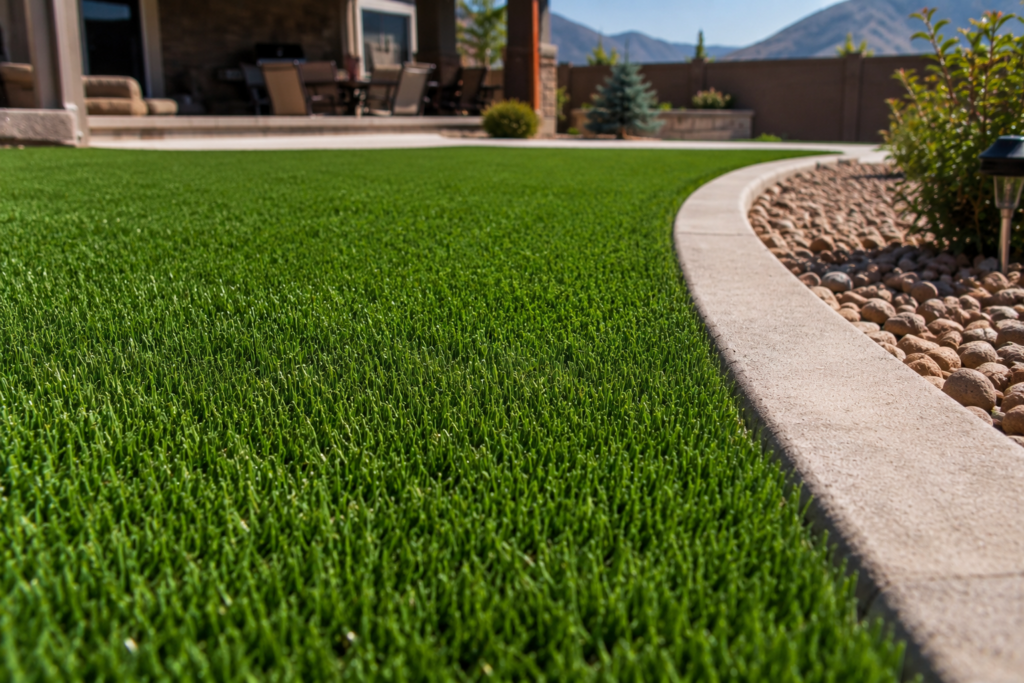
Most homeowners spend a lot of time picking out their turf. Blade style, color, pile height, whether it’ll hold up to dogs or look right in a front yard. What they spend almost no time thinking about is what goes underneath the blades, and that’s where infill comes in. Infill is the material distributed across the base of your installed turf, and it has more to do with how your yard looks, feels, and performs than most people realize. The turf you see on the surface sits on top of it. Without infill, the blades flatten and don’t recover, drainage slows down, and the surface loses the cushion that makes it comfortable to walk and play on.
In Colorado Springs specifically, infill choice also affects how your yard handles heat, which matters more at 6,035 feet of elevation than it does in most places. This guide covers what infill does, what types are available, and how to figure out which one fits your yard.
What Turf Infill Does
Infill serves four functions in an installed turf system. It keeps the blade structure upright so the turf looks full and natural instead of matted down. It provides cushion, which affects how the surface feels underfoot and how much impact absorption it provides for kids or pets playing on it. It adds weight to the turf backing, which helps the system stay stable and resist shifting over time. And it plays a role in drainage, affecting how quickly water moves through the surface and into the base layer below.
The type of infill determines how well each of those functions gets handled. A cheap rubber crumb infill will do the minimum for blade structure and drainage but won’t do much for heat or odor. A purpose-built antimicrobial infill like Envirofill handles blade support, drainage, and bacterial control all at once. The right choice depends on what your yard needs to do.
The Main Infill Types: What Each One Is For
Envirofill (standard on all Dominion Turf installs)
Envirofill is the infill we include in every residential installation. It’s a coated silica sand product with two built-in properties that matter for Colorado Springs yards: antimicrobial protection and HydroChill cooling technology.
The antimicrobial coating discourages bacterial growth on the turf surface, which is particularly valuable for pet owners. Unlike plain sand infill, Envirofill doesn’t just let bacteria accumulate between maintenance cleanings.
The HydroChill component absorbs water when the turf is wet, then releases it slowly as evaporative cooling. On a hot Colorado day, misting your turf for a few minutes can drop the surface temperature by 30 to 50 degrees Fahrenheit. At elevation, where UV intensity is higher than most Colorado homeowners expect, that cooling effect is worth paying attention to.
Enzyme-infused infill (upgrade for heavy pet use)
For yards with dogs that spend significant time outside, we offer an upgrade to enzyme-infused infill. The enzymes actively break down the organic compounds in pet waste rather than just controlling bacteria on the surface. The result is a yard that stays fresher longer between rinse-downs, and cleanup that’s less effortful than it would be with standard infill. If your household has multiple dogs or a dog that spends the majority of its outdoor time in a specific area of the yard, this upgrade is worth considering.
T-Cool (maximum heat reduction)
T-Cool is a heat-reducing infill option for homeowners who want the maximum cooling performance from their turf. Where HydroChill works through evaporative cooling when wet, T-Cool uses a different mechanism that maintains lower surface temperatures through longer periods of heat exposure. Colorado Springs averages around 243 sunny days per year, and south-facing yards or yards with little shade can get very warm in July and August. For families who want the yard to be comfortable for barefoot kids or dogs during peak afternoon heat, T-Cool is the highest-performing option.
Which Infill Is Best for Yards with Pets or Kids?
For pets, the infill that does the most work is either Envirofill or the enzyme-infused upgrade, depending on dog count and yard use intensity. Envirofill’s antimicrobial coating handles light to moderate pet use well, and the HydroChill cooling is a bonus for dogs that spend time in warm weather. If you have more than one dog or a dog that has a specific favorite spot in the yard, the enzyme-infused option is a better fit because it prevents odor buildup rather than managing it after the fact.
For kids, the primary concern is surface temperature and cushion. Envirofill with HydroChill handles both. Young children playing barefoot on a summer afternoon are the use case HydroChill was designed for. T-Cool is worth the upgrade for households with kids who spend long hours outside in direct sun.
For yards that handle both pets and kids, Envirofill is the practical baseline. Most of our customers with family yards find it covers both use cases without needing an upgrade, though households with heavy pet activity sometimes add the enzyme option for the odor management.
Does Infill Need to Be Replaced Over Time?
Infill doesn’t need to be replaced on any set schedule, but it does compact and settle with heavy use over time. High-traffic areas, particularly spots where dogs run the same path repeatedly or where kids play on the turf daily, will compress the infill faster than the rest of the yard. When you notice those areas starting to look flatter or feel firmer underfoot, that’s a sign infill has compacted and a top-off is worthwhile.
In a typical residential yard with normal use, most homeowners don’t need to think about infill top-offs for several years after installation. Yards with dogs may notice compaction in specific high-traffic areas sooner than that. A stiff brush and a light rinse in those areas on a regular basis helps extend the time between top-offs by keeping the infill from packing too tightly.
What About Infill and Colorado’s Altitude
Colorado Springs sits at 6,035 feet. The UV index here runs higher than comparable temperature days at sea level because the atmosphere at altitude filters less of the sun’s radiation. For turf infill, this means heat management matters more than it does in lower-elevation markets, and infill that handles UV exposure without breaking down is worth prioritizing.
Envirofill’s silica sand base doesn’t degrade with UV exposure the way rubber infill products can. Rubber crumb infill, common in lower-cost installations, breaks down over time in high UV environments and releases heat rather than managing it. For a Colorado Springs yard that will be in full sun for years, the infill material itself should be UV-stable.
Frequently Asked Questions About Turf Infill
Is infill required for artificial turf?
Yes. Without infill, the turf blades flatten permanently under foot traffic and don’t recover. Infill is also what gives the turf its cushion and supports proper drainage. Every installation we do at Dominion Turf includes Envirofill as standard.
Can infill affect how hot my turf gets?
Yes, and this is one of the most important practical differences between infill types. Standard sand or rubber infill holds heat. Envirofill’s HydroChill component actively cools the surface when wet. T-Cool provides maximum heat reduction for yards in full sun. In Colorado Springs, where summer UV intensity is higher than most homeowners expect, infill choice has a real impact on surface temperature.
How do I know if my infill needs a top-off?
The clearest sign is blades in high-traffic areas that no longer stand upright after brushing, or areas that feel firmer and more compressed than the rest of the yard. A visual inspection after the turf has been brushed will show whether the blade structure is being supported or whether infill has settled below optimal levels.
Is infill safe for kids and pets?
Envirofill, the standard infill we use, is non-toxic and lead-free. The antimicrobial coating is safe for pets and children. If you’re comparing installers and they’re offering rubber crumb or unknown infill types, ask specifically about the product specs. Not all infill is the same.
Does infill affect drainage?
Yes. Infill particle size and type affect how quickly water passes through the turf surface and into the base layer. Envirofill is sized to maintain effective drainage without compacting into a barrier. Poorly chosen or over-applied infill can slow drainage and cause water to pool on the surface.
How much infill does a typical yard need?
Infill quantities depend on turf pile height and yard size. Your estimate will include the specific amount for your yard. As a general reference, most residential turf systems use two to three pounds of infill per square foot. Your installer should calculate this for your specific product, not apply a flat rate across all turf types.
Choosing the right infill is easier once you know what your yard needs to do. If you have dogs, kids, a yard in full sun, or some combination of all three, the infill conversation is worth having before your installation starts, not after. We cover infill options at every estimate and help you find the right fit for your yard and your budget.
See our turf infill service page for more on what we carry, or browse our residential turf options if you’re earlier in the process and still comparing styles.