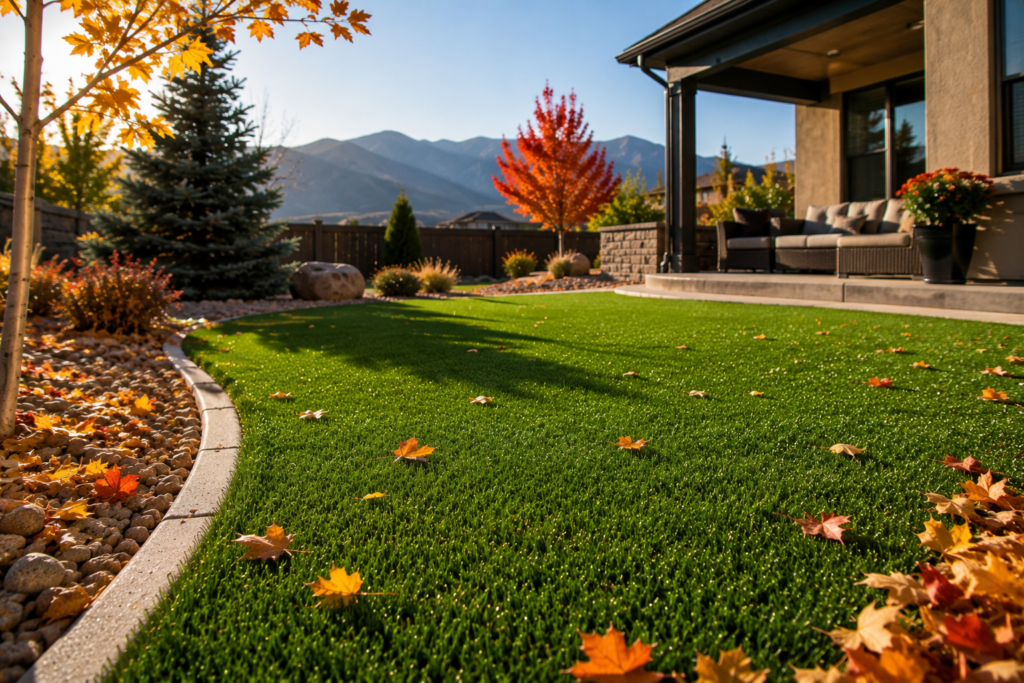
Most homeowners assume spring is the only window for outdoor installations. And spring is busy for us, there’s no question about it. April and May are high-demand months, and some customers who start thinking about turf in March end up on a schedule that pushes their install into late spring or early summer. What fewer people know is that fall is equally good, and in some ways easier, as an installation window in Colorado Springs.
September through mid-November is the second primary installation window here, and it’s one we’d encourage more homeowners to take seriously. The ground is still workable, temperatures make for better working conditions, and the homeowners who book a fall install often do so with less schedule pressure than those competing for spring slots. If you’ve been thinking about turf since summer and haven’t pulled the trigger, fall is not a backup plan. It’s a legitimate window.
Why Fall Works Well for Turf Installation in Colorado Springs
The two things that matter most for a successful turf installation are ground conditions and temperature at installation time.
On ground conditions: artificial turf base work requires excavation, compaction, and grading of the area being installed. The ground needs to be workable, which means not frozen solid. In Colorado Springs, the ground typically stays workable through mid-November. We lose the window when sustained freezing temperatures start driving frost deeper than a few inches, which usually happens in late November and can vary by a week or two depending on the year. September and October are well within the viable window, and most of November is too.
On temperature: the base material used in turf installation, crushed rock and sand, compacts and sets best in moderate temperatures. Very hot days can make the work harder and cause materials to dry faster than ideal during grading. Fall temperatures in Colorado Springs, typically in the 50s and 60s through October, are close to ideal for base work. The turf itself isn’t temperature-dependent the way seeded grass is, but the base installation quality benefits from conditions where the crew isn’t working in peak summer heat.
How Late in the Year Can Turf Be Installed in Colorado Springs?
The practical answer for most years is mid-November. That’s when sustained freezing temperatures begin to make excavation and compaction unreliable. A project that starts in late October and runs into the first week of November is generally fine. A project attempting base work in December is not, because the ground won’t compact properly when frozen.
The product itself has no installation temperature limit in the same way. The turf can be laid in any reasonable temperature. The constraint is entirely in the base preparation phase. If the base gets done before the ground freezes, the turf can go down at any point after.
For homeowners who want a fall installation, the safe planning target is to have the project underway by the end of October. That gives a buffer before weather becomes a genuine variable and puts you in the yard well before the holidays.
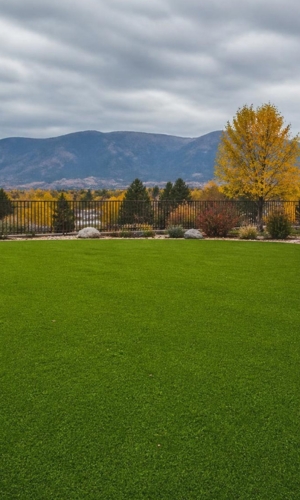
What Are the Advantages of Installing in Fall Versus Spring
Schedule availability. Spring is the peak demand season for turf installation in Colorado Springs. Customers who start shopping in late February and March are competing for slots with everyone else who had the same idea. Fall typically has more scheduling flexibility, particularly in September and early October before the second wave of decision-makers starts calling.
Ground conditions. Spring in Colorado Springs means variable weather, including late snow events in April that can delay projects and wet ground that complicates base work. Fall weather patterns are more predictable for scheduling purposes. October is typically dry, with stable daytime temperatures, which makes for consistent working conditions.
You have it before winter. Turf installed in September or October means you’re heading into winter with a yard that no longer needs watering, reseeding, or any pre-winter lawn prep. And it means the yard is ready for use as soon as outdoor weather returns in spring, with no wait for a spring installation queue.
Pet and family timing. Dogs adjusted to a new turf surface within a few weeks of installation. A fall installation gives K9 yards time to settle before the high-use spring and summer season, which is particularly relevant for households with dogs that spend extended time outside once warm weather returns.
What to Do Before Your Fall Installation Appointment
The prep steps for fall installation are minimal, but a few things help the process move efficiently.
Clear the yard of outdoor furniture, planters, pet toys, and any movable items before the crew arrives. The installation team handles removal of existing grass, weeds, and debris as part of the process. You don’t need to do that work in advance.
If you have irrigation lines running through the yard area being installed, flag their location or let us know before the installation starts. Base excavation can go 3 to 4 inches deep, and knowing where irrigation runs is useful for the prep phase.
If you’re adding a K9 turf area alongside a standard lawn area, decide on the layout before the estimate. The infill selection for a pet area is different from a standard residential lawn, and having that conversation at the estimate stage rather than on installation day keeps everything moving.
Beyond that, fall installations proceed exactly the same way as spring installations. The process, timeline, and what you get at the end are identical. The turf doesn’t know what month it was installed.
Will New Turf Hold Up Through a Colorado Winter
Yes, and this is one of the strongest arguments for not waiting until spring if you’re already thinking about it. Properly installed artificial turf handles Colorado winters without any preparation on the homeowner’s part.
Snow can be removed with a plastic shovel or leaf blower. Ice melts and drains through the base layer the same way rain does. The turf fibers stay pliable through freezing temperatures and don’t become brittle. The base layer we install is built for Colorado’s freeze-thaw conditions specifically, with the compaction depth and material selection calibrated for the ground movement that happens here over winter.
Turf installed in October will look the same in April as it did in November. There’s no dormancy period, no browning out, and no spring revival process. Your yard is green through December and green again when the snow melts.
Our residential turf page covers the full installation process and turf options if you’re still in the comparison stage. And once you’re installed, our year-round maintenance guide covers exactly what winter turf care looks like.
Frequently Asked Questions About Fall Turf Installation in Colorado Springs
How far out should I book a fall installation?
Four to six weeks is a reasonable lead time in September and October. The fall window is shorter than spring, and once the second wave of homeowners who missed spring starts calling in late September, available slots in October fill faster than people expect. If you’re reading this in August, it’s not too early to get an estimate scheduled.
Can turf be installed over existing grass in fall?
No. Existing grass, weeds, and debris are removed as part of the site preparation phase. The base layer needs to be installed directly over the prepared subgrade. This is true regardless of season.
Is the cost different for fall installation?
No. Our installation pricing doesn’t vary by season. The same factors that affect spring pricing, yard size, site conditions, turf selection, and access, apply in fall.
Does turf look different after being covered in snow all winter?
No. Once snow clears, the turf surface is the same as it was before the snow fell. A light brush of high-traffic areas in spring restores blade structure in any spots that have compressed, but the color and overall appearance are unaffected by winter weather.
Will the install crew work in cold temperatures?
Yes, within the workable window. Our crews work through cooler fall temperatures without issue. The limiting factor is ground conditions, not air temperature. If a day’s forecast includes conditions that would affect base work quality, we’ll communicate that proactively rather than pushing through and compromising the installation.
What if it snows during my installation window?
Light snow events don’t typically delay installations. Heavy snow that leaves significant accumulation or turns the ground muddy may push the schedule by a day or two. We coordinate directly with customers when weather becomes a variable rather than leaving it as a surprise.
Fall is a good window. It’s a reliable window. And it’s one that fills faster than most homeowners expect once September is underway. If you’re ready to move forward or want to talk through what the process looks like for your yard, request a free estimate here and we’ll get something on the calendar.