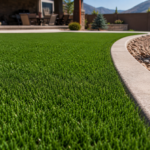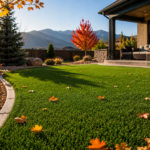
One of the things homeowners appreciate most after installing turf is that the maintenance conversation gets a lot shorter. No mowing schedule, no fertilizing calendar, no seasonal reseeding. But low maintenance isn’t the same as no maintenance, and knowing what your turf does need, and when, keeps it looking the way it did the day it was installed for fifteen to twenty years rather than ten.
Colorado Springs adds a layer to this that homeowners in lower-elevation markets don’t deal with. The UV index here runs higher because the thinner atmosphere at 6,035 feet filters less solar radiation. Winters include hard freezes, snowfall, and freeze-thaw cycles that put stress on base materials. Summers are warm and dry, with afternoon temperatures that can push surface temperatures on unshaded turf well above air temperature. Understanding what your turf goes through across the full year helps you care for it in a way that matches what it’s experiencing.
This guide covers what your turf needs by season, what the weekly routine looks like, and what to watch for over time.
The Weekly Routine: What Takes Five Minutes
For most residential yards, a weekly turf routine takes about five minutes and consists of two things: a quick visual scan for debris, and a rinse if the yard sees regular pet use.
Leaves, pine needles, and windblown debris settle into turf the same way they’d settle into natural grass. Left there long enough, organic debris can hold moisture against the turf backing and slow drainage. A leaf blower on a low setting or a quick rake with a plastic rake clears it without disturbing the infill.
Households with dogs should rinse the yard with a garden hose once a week. The rinse pushes soluble waste through the infill and into the drainage layer below, keeping the surface cleaner and reducing the slow buildup that leads to odor. The Envirofill antimicrobial infill we use in all our installations controls bacterial growth between rinses, but the rinse itself does the work of clearing the surface.
Beyond those two things, most weeks require nothing.
How Often Does Artificial Turf Need to Be Cleaned?
A deep clean, meaning a thorough rinse and a brush of the entire surface, should happen two to four times per year for a typical residential yard. Yards with heavy pet use benefit from once a month.
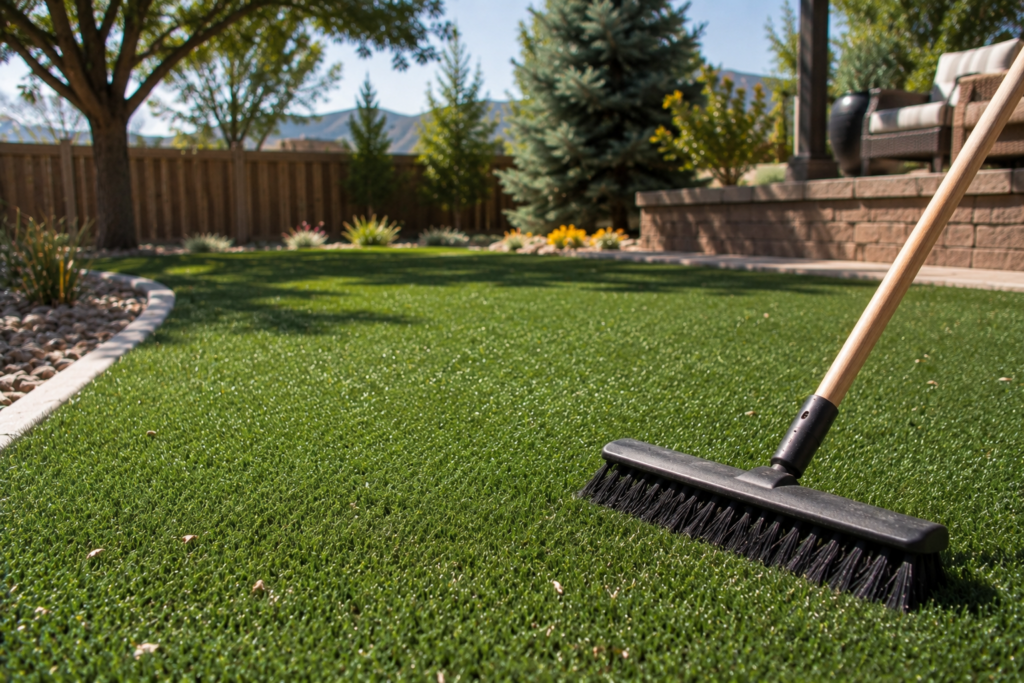
The brush is the part most homeowners skip and most notice when they’ve been skipping it. High-traffic areas, the path from the back door to the fence, the spot where kids always play, the corner the dog favors, gradually pack down the infill and flatten the blades. A stiff brush with a natural or synthetic bristle (never metal, which damages the fibers) pulled against the grain of the turf resets the blade structure and redistributes infill that has migrated.
For pet owners, enzyme-based turf cleaners are worth having on hand for spot treatment. These break down organic compounds at the source rather than masking them, and they won’t damage the turf fibers or infill coating. Avoid bleach and solvent-based cleaners entirely. They degrade the turf backing and can break down the coating on antimicrobial infill products.
Seasonal Care by the Colorado Springs Calendar
Spring (March through May)
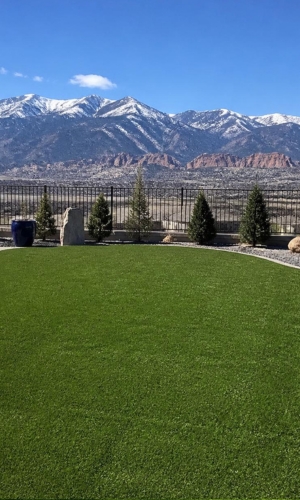
Spring is when most turf issues from winter become visible. Walk the yard and look for any areas that seem soft, uneven, or where the turf has lifted slightly at an edge or seam. Freeze-thaw cycles can shift the base layer slightly over a hard winter, and catching any movement early matters.
This is also the time to do a thorough brush and rinse to clear anything that settled in over winter. If you notice compacted infill in specific areas after brushing, a light top-off of Envirofill in those spots restores the blade structure and cushion for the season ahead.
Spring is also the primary installation window if you’re considering expanding your turf area or adding a pet zone.
Summer (June through August)
Summer maintenance is primarily about heat management. Your Envirofill infill handles most of this automatically once misted, but making a habit of running your sprinklers or a garden hose over the turf on very hot days extends the comfort window significantly. Surface temperatures on an unshaded turf yard on a 90-degree day in Colorado Springs can reach 120 to 140 degrees Fahrenheit without cooling. A two-minute rinse brings that down dramatically and keeps it manageable for the next few hours.
Debris management matters more in summer because dry organic material can become a fire risk in Colorado’s low-humidity conditions. Keep the surface clear of leaves and debris, especially in late summer when wildfire risk in the region is higher.
Pet owners should increase rinse frequency in summer to twice weekly in warm weather. Heat accelerates bacterial activity, and the combination of heat and pet waste without regular rinsing is where odor issues develop.
Fall (September through November)
Fall brings falling leaves and the beginning of freeze-thaw cycles in late October and November. A leaf blower is the most efficient tool for keeping the turf clear through leaf season. Letting leaves mat down on turf and break down over winter creates a layer of organic debris that’s harder to clear in spring and can slow drainage.
If you’re planning to add a turf area or replace a section, fall is the second-best installation window in Colorado Springs. The ground stays workable through mid-November in most years, and cooler temperatures mean comfortable conditions for the installation crew and ideal conditions for the base material to set. Installation schedules fill quickly once the fall buying window opens, so if you’re considering it, getting an estimate on the calendar in August or early September is worth doing.
Winter (December through February)
Snow can be removed with a plastic snow shovel, a leaf blower for lighter accumulation, or a soft push broom. Avoid metal shovels, which can snag the turf backing, and avoid rock salt, which can damage the infill coating over time. Sand-based ice melt products are a safer option if the turf is in an area that develops ice.
The turf itself handles freezing temperatures without any special preparation. The base layer is built for Colorado’s freeze-thaw conditions, and the turf stays pliable through cold weather. In heavy snow winters, the turf will simply be covered until spring, and once it’s clear, a brush-down and rinse restores the surface.
What to Watch for Over Time
Blade recovery in high-traffic areas. If brushing no longer restores the blades in a specific area, the infill has compacted below optimal levels and a top-off is needed. This is a routine maintenance item, not a product failure.
Edge and seam integrity. Periodically check where the turf meets hardscape edges, fences, or borders. Turf that lifts slightly at an edge is a straightforward repair when caught early. Left unaddressed, an edge that works loose allows the turf to shift, which leads to more significant repairs.
Drainage performance. After heavy rain, water should disappear from the turf surface within a few minutes. If you’re seeing water sitting on the surface for ten minutes or longer after rain stops, there may be a drainage issue worth investigating. The most common cause is debris compacted into the base layer, which a professional inspection can assess.
Infill depth. Over years of use and weather, infill levels settle. A yearly inspection of infill depth in key areas helps identify spots that need top-offs before they affect blade structure or cushion noticeably.
Frequently Asked Questions About Turf Maintenance
How long does well-maintained artificial turf last?
Most professionally installed residential turf lasts 15 to 20 years. The range depends on foot traffic, pet use, and how consistently the turf receives basic care. Turf that’s brushed regularly, kept clear of debris, and has infill topped off as needed tends to hold its appearance and cushion much closer to the 20-year end of that range.
Does turf need any maintenance in winter in Colorado?
Snow removal with a plastic shovel or leaf blower is all that’s typically needed. The turf stays intact through freezing temperatures and freeze-thaw cycles without special preparation. Sand-based ice melt is safe to use if needed. Rock salt and metal shovels should both be avoided.
How do I remove pet odor from artificial turf?
A combination of regular rinsing, enzyme-based turf cleaner for spot treatment, and antimicrobial infill handles pet odor in most residential yards. If odor has developed despite regular rinsing, an enzyme cleaner applied to the affected area and allowed to sit before rinsing typically resolves it. Persistent odor after treatment is usually a sign that infill in that area has reached the end of its effective life and needs to be replaced.
Can I pressure wash artificial turf?
Yes, with some care. A pressure washer on a low setting is an effective deep-cleaning method for turf that sees heavy use. High pressure concentrated on one spot can dislodge infill and damage fibers, so keep the nozzle moving and use a fan tip rather than a pinpoint setting.
Will Colorado's hail damage my turf?
Hail does not typically damage properly installed turf. The fibers are durable enough to handle typical Colorado hailstorms, and the base layer is unaffected. Very large hail in an extreme storm can leave temporary fiber compression, which usually recovers with brushing once the storm passes.
Does artificial turf fade?
High-quality turf products include UV stabilization to resist color fading. In Colorado Springs, where UV exposure is higher than at lower elevations, product quality matters. The turf we install at Dominion Turf uses UV-stabilized fibers designed for Colorado’s sun exposure. Some very gradual fading is possible over ten or more years in full sun, but it’s a slow process and maintains a consistent appearance across the yard.
If you have questions about maintaining your specific installation or want to schedule an infill top-off or turf inspection, contact us here. And if you’re still in the research phase, our residential turf service page covers turf types, pricing, and the full installation process in detail.