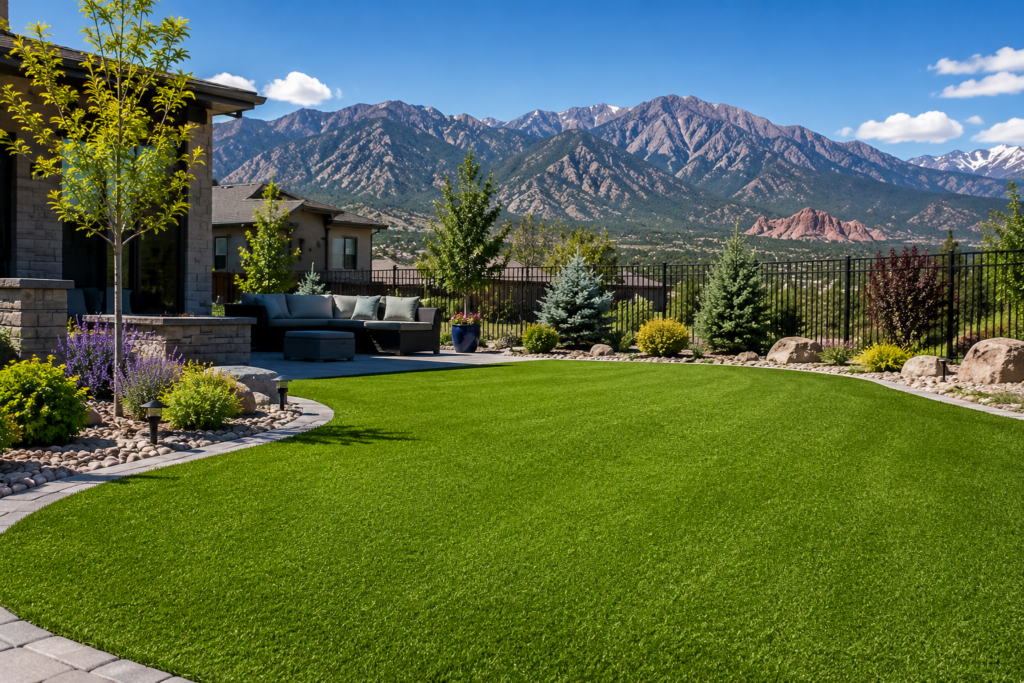
One of the most common concerns homeowners have about artificial turf—especially in Colorado—is heat.
With strong sun exposure, higher elevation, and dry conditions, it’s a fair question: does artificial turf get hot in the summer?
The short answer is yes—artificial turf can get warm in direct sunlight. However, the full picture is more nuanced. Temperature depends on several factors, and modern turf systems are designed with solutions that help manage heat effectively.
In this guide, we’ll break down how turf responds to heat in Colorado, how it compares to other surfaces, and what homeowners can do to keep their lawn comfortable.
Does Artificial Turf Get Hot?
Artificial turf can become warmer than natural grass when exposed to direct sunlight for extended periods.
This happens because synthetic fibers absorb and retain heat differently than living grass. Natural grass stays cooler due to moisture and transpiration, while turf behaves more like other outdoor surfaces and absorbs heat more quickly. Studies have consistently shown that synthetic surfaces can reach higher surface temperatures than natural grass under the same conditions.
If you want a deeper breakdown of this topic, Dominion Turf also covers it in detail in this article on will my turf get hot, which explains how different conditions impact surface temperature.
How Turf Compares to Other Surfaces
When evaluating heat, it helps to compare artificial turf to other materials commonly found in backyards.
In most cases:
- Artificial turf is cooler than concrete, asphalt, and pavers
- Similar in temperature to decks or rubber play surfaces
- Warmer than natural grass in direct sun
This means that while turf does warm up, it is often more comfortable than many hardscape alternatives used in Colorado landscapes.
Why Turf Can Feel Hotter in Colorado
Colorado Springs presents a unique environment that can amplify surface temperatures.
High Elevation Sun Exposure
At higher elevations, sunlight is more intense due to thinner atmosphere. This increases UV exposure and can raise surface temperatures on any material—including turf.
Dry Climate Conditions
Unlike humid climates, Colorado’s dry air means there is less natural moisture to cool surfaces. This affects not just turf, but also soil, concrete, and decking materials.
Homeowners looking for water-efficient landscaping often turn to turf as part of a broader strategy. You can see how it fits into drought-conscious design in this guide on creating a drought-tolerant landscape in Colorado Springs.
Direct Sunlight and Time of Day
Like any surface, turf temperature peaks during mid-afternoon when sunlight is strongest. Shaded areas will remain significantly cooler.
How to Keep Artificial Turf Cooler
The good news is that there are several effective ways to manage turf temperature, especially with modern installation methods.
1. Cooling Infill Technology
Infill plays a major role in heat management.
Products like cooling infill are designed to:
- Reduce surface temperature
- Retain moisture longer
- Improve overall comfort
If you’re exploring turf systems, understanding infill options is key. This article on artificial turf infill options explains how different materials impact performance.
2. Occasional Watering
A quick rinse with a hose can significantly reduce surface temperature—often within seconds.
This is a simple and effective solution during peak heat, especially for:
- Play areas
- Pet spaces
- Outdoor gatherings
3. Strategic Shade
Adding shade elements like:
- Trees
- Pergolas
- Patio covers
…can dramatically reduce heat buildup and improve comfort.
4. Choosing the Right Turf Product
Not all turf is created equal. Some products are designed with:
- Heat-reducing technology
- Lighter color blends
- Improved airflow
For example, premium turf lines like Highland Turf are built for performance in Colorado conditions.
Is Artificial Turf Too Hot for Pets or Kids?
This is another common concern—and an important one.
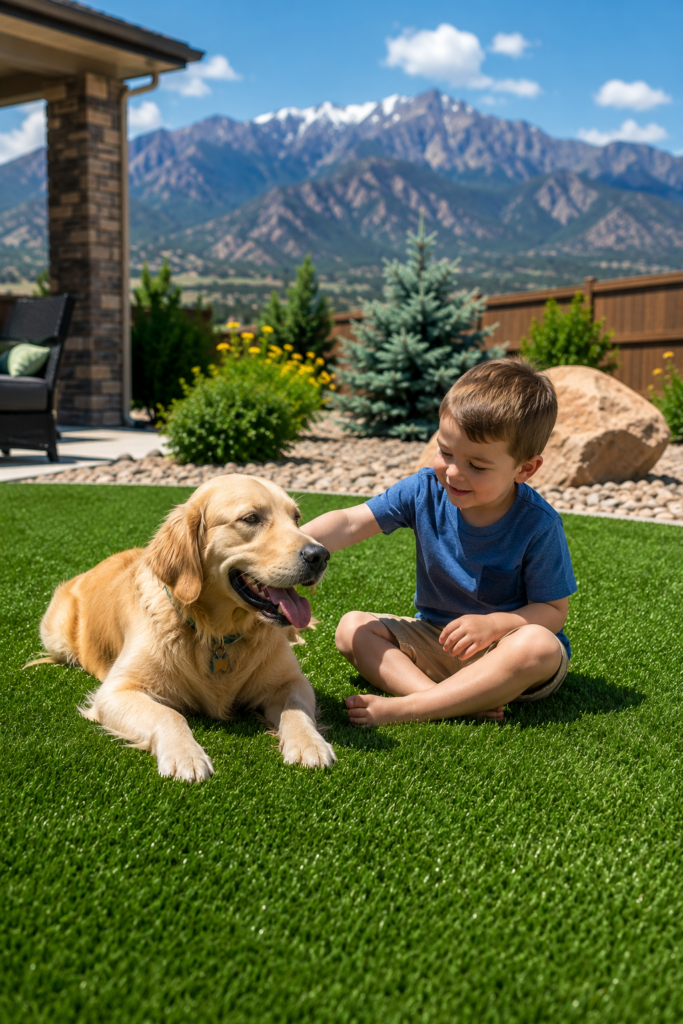
In most cases, artificial turf is safe for both pets and children. However, like any outdoor surface, it can become warm during peak sun hours.
Pet owners often choose systems specifically designed for durability and comfort, such as K9 turf solutions, which offer enhanced drainage and usability.
For everyday use:
- Morning and evening are typically cooler
- Midday heat can be managed with water or shade
- Turf remains usable year-round
The Bigger Picture: Year-Round Performance
While summer heat is a valid concern, it’s just one part of the equation.
Artificial turf offers strong performance across all seasons, including:
- Snow and winter conditions
- Heavy rain and drainage
- High-traffic use
If you’re evaluating turf for long-term use, it helps to consider how it performs year-round. This overview of year-round artificial grass performance provides a broader perspective.
What Homeowners in Colorado Springs Should Expect
In real-world use, most homeowners find that artificial turf is comfortable and usable throughout the year.
Yes, it can get warm during peak summer afternoons—but so do most outdoor surfaces.
With the right installation approach, materials, and simple cooling strategies, artificial turf remains a practical and popular option for Colorado Springs homes.
Frequently Asked Questions
Does artificial turf get hotter than concrete?
No—artificial turf is typically cooler than concrete or asphalt, though warmer than natural grass.
Can you walk barefoot on artificial turf in the summer?
Yes, but during peak heat it may feel warm. Rinsing the surface or using shaded areas improves comfort.
How do you cool down artificial turf quickly?
A quick spray with a garden hose is one of the fastest and most effective ways to reduce surface temperature.
Is artificial turf safe for dogs in hot weather?
Yes. Pet-specific turf systems are designed for durability and drainage, and simple cooling methods help maintain comfort.
Does turf stay hot all day?
No. Temperatures fluctuate throughout the day, with peak heat in the afternoon and cooler conditions in the morning and evening.
Ready to Explore Artificial Turf for Your Home?
If you’re considering artificial turf but have questions about heat, installation, or performance, the best next step is to speak with a local expert.
Contact Dominion Turf to learn more or request a quote tailored to your property.